Bloklab Blog
Blockchain-Based GovTech and Digital Identity Systems
Published on 3/10/2026
Exploring how blockchain digital identity systems create secure public infrastructure for governments, enabling transparent services and citizen-controlled data.
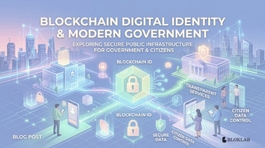
Blockchain-Based GovTech and Digital Identity Systems
The Future Infrastructure of Trust in the Digital State
Governments around the world are undergoing one of the most significant transformations in modern history: the transition from paper-based bureaucracies to fully digital governance systems. As societies become increasingly connected and services move online, trust, identity, and verification emerge as the foundational pillars of digital public infrastructure.
At the center of this transformation lies GovTech—technology designed to improve the way governments operate and deliver services. Among the most promising innovations within GovTech is blockchain-based digital identity systems, which aim to redefine how citizens prove who they are, access services, and interact with public institutions.
Blockchain introduces a paradigm shift: instead of identity being controlled and stored solely by centralized government databases, it can become verifiable, secure, portable, and citizen-owned.
This article explores the architecture, benefits, challenges, and future implications of blockchain-powered identity systems within government technology.
The Problem With Traditional Identity Systems
Most governments today rely on centralized identity registries. These systems typically store sensitive personal data such as:
Full name
National ID number
Date of birth
Address
Biometric identifiers
Tax and social records
While these databases are essential for modern governance, they come with several structural issues.
1. Single Points of Failure
Centralized databases are prime targets for cyberattacks. When breached, millions of citizens’ identities can be compromised. Over the last decade, multiple governments have suffered massive data leaks.
2. Fragmented Government Systems
Public services often operate in silos. Healthcare, taxation, transportation, education, and social services may all maintain separate identity databases. This fragmentation leads to:
Repeated verification processes
Inconsistent data
Higher administrative costs
3. Limited Citizen Control
In traditional models, citizens rarely have control over how their personal data is stored, shared, or used. Identity becomes something granted and managed by institutions, rather than owned by individuals.
4. Cross-Border Identity Limitations
As economies globalize and digital services expand, traditional national identity systems struggle to support cross-border digital interactions such as international banking, digital nomadism, or remote employment.
These limitations create a clear need for next-generation digital identity infrastructure.
What Is Blockchain-Based Digital Identity?
Blockchain-based identity systems use distributed ledger technology (DLT) to create tamper-resistant, verifiable identity credentials.
Instead of storing all personal data in centralized government servers, blockchain enables a model called Self-Sovereign Identity (SSI).
In this model:
Individuals control their identity credentials.
Governments issue verifiable attestations.
Third parties verify credentials without needing direct access to government databases.
Core Components
A blockchain identity ecosystem typically consists of:
1. Decentralized Identifiers (DIDs)
Unique cryptographic identifiers owned by individuals.
2. Verifiable Credentials (VCs)
Digitally signed credentials issued by trusted authorities (government agencies, universities, banks).
3. Digital Identity Wallets
Applications where citizens store their credentials securely.
4. Verification Infrastructure
Systems that allow institutions to verify credentials cryptographically without contacting the issuer every time.
This architecture significantly reduces the need for centralized data storage while preserving trust.
How a Blockchain Identity System Works
To understand the system in practice, consider the following lifecycle.
Step 1: Identity Issuance
A government authority verifies a citizen’s identity through standard procedures (passport office, municipal registry, etc.).
After verification, the authority issues verifiable credentials such as:
Citizenship credential
Driver’s license
Taxpayer certificate
Health insurance credential
These credentials are cryptographically signed and stored in the citizen’s digital identity wallet.
Step 2: Credential Storage
The citizen keeps these credentials in a secure digital wallet on their phone or hardware device.
Importantly:
Personal data is not stored on the blockchain.
The blockchain stores proofs and public keys that allow verification.
Step 3: Identity Verification
When a citizen wants to access a service—for example:
opening a bank account
registering a company
accessing healthcare
applying for a permit
They share a verifiable proof of the required information.
Instead of revealing the entire identity, selective disclosure can be used.
Example:
A service only needs to confirm the citizen is over 18. The system verifies this fact without revealing the exact birthdate.
Step 4: Cryptographic Validation
The service provider verifies:
the credential’s digital signature
the issuer’s authority
the blockchain record proving authenticity
Verification happens instantly without contacting the issuing authority.
Key Advantages of Blockchain-Based Identity Systems
1. Citizen Ownership of Identity
Traditional identity systems are institution-centric.
Blockchain identity shifts the paradigm toward user-controlled identity, where citizens decide:
who can access their data
which attributes to reveal
how long access is granted
This model aligns with modern privacy principles.
2. Reduced Identity Fraud
Cryptographic credentials make identity forgery extremely difficult.
Benefits include:
reduced document fraud
secure online onboarding
trusted digital signatures
Governments and financial institutions can dramatically reduce Know Your Customer (KYC) costs.
3. Interoperability Across Services
A standardized digital identity layer allows different government systems to interoperate.
Examples:
healthcare providers verifying insurance instantly
universities issuing digital diplomas
tax authorities accessing verified employment credentials
This creates a unified digital ecosystem.
4. Privacy by Design
Advanced cryptographic techniques such as:
Zero-Knowledge Proofs
Selective Disclosure
Pairwise Identifiers
allow verification without exposing unnecessary personal data.
This is a significant improvement over traditional identity sharing methods where entire documents are copied.
5. Cross-Border Digital Identity
Blockchain identity systems can support global verification frameworks.
A digital credential issued in one country could be verified in another without requiring complex integrations between governments.
This capability could enable:
global digital residency
international remote work verification
cross-border financial services
GovTech Applications Beyond Identity
While digital identity is foundational, blockchain-based GovTech can support many additional use cases.
Public Records
Immutable ledgers can store references to:
land registries
property ownership
marriage certificates
academic diplomas
Reducing fraud and improving transparency.
Voting Systems
Blockchain-based voting infrastructure could enable:
tamper-resistant digital voting
transparent election audits
remote participation for citizens abroad
However, voting systems require extremely careful design to preserve secrecy and integrity.
Welfare and Social Benefits
Blockchain can ensure benefits reach the correct recipients while preventing fraud.
Smart contracts could automate:
unemployment payments
housing subsidies
healthcare reimbursements
Government Procurement
Public procurement systems built on blockchain could improve transparency in:
government contracts
vendor selection
public spending
Reducing corruption risks.
Real-World Implementations
Several countries have already begun experimenting with blockchain-based digital identity.
Estonia
Estonia is often considered the global leader in digital governance. Its e-Residency and digital ID infrastructure allow citizens to access nearly all government services online.
Although Estonia’s core system is not purely blockchain-based, it integrates KSI blockchain technology to protect data integrity.
European Union Digital Identity Wallet
The EU is developing a European Digital Identity Wallet that will allow citizens to store identity credentials, driving licenses, diplomas, and financial information securely.
This initiative aims to create a standardized digital identity across all EU member states.
Singapore
Singapore has invested heavily in National Digital Identity (NDI) programs, integrating identity with financial services, healthcare, and government platforms.
Technical Architecture of Blockchain Identity Systems
A robust system typically includes several layers.
1. Identity Layer
Decentralized Identifiers (DIDs)
Public-private key infrastructure
2. Credential Layer
Verifiable credentials
Issuer registries
revocation registries
3. Blockchain Layer
The blockchain stores:
DID documents
credential proofs
revocation status
Not personal data.
4. Application Layer
Government services, banks, universities, and private platforms interact with the identity system through APIs.
Challenges and Risks
Despite its potential, blockchain-based GovTech faces several challenges.
Scalability
National identity systems must support millions of users and billions of transactions.
Blockchain infrastructure must be optimized for high throughput and low latency.
Regulation and Legal Recognition
Digital credentials must be recognized legally.
Governments need frameworks defining:
digital signatures
identity verification standards
cross-border recognition
Digital Inclusion
Not all citizens have access to smartphones or digital tools.
Identity systems must provide offline alternatives.
Key Management
If citizens lose their private keys, identity recovery mechanisms must exist without compromising security.
The Future of Digital Governance
Blockchain-based identity systems are not just a technological innovation; they represent a fundamental shift in how societies manage trust.
In the coming decades, we may see the emergence of:
portable global identities
AI-integrated digital governance
automated regulatory compliance
borderless digital public services
Governments that adopt secure digital identity infrastructure early will likely become leaders in the next era of digital economies.
Conclusion
Blockchain-based GovTech and digital identity systems have the potential to redefine the relationship between citizens and governments. By combining cryptographic security, decentralization, and privacy-preserving technologies, these systems create a new foundation for digital trust.
Instead of fragmented databases and bureaucratic inefficiencies, the future may hold a world where citizens interact with public institutions through secure, interoperable, and user-controlled digital identities.
As digital societies continue to evolve, blockchain-powered identity infrastructure could become one of the most critical components of modern governance—enabling transparent, efficient, and citizen-centric governments for the digital age.