Bloklab Blog
Carbon Footprint and the Future of Sustainable Cities
Published on 3/10/2026
Discover Finland’s innovative carbon footprint initiatives, from personal carbon trading in Lahti to smart city sustainability programs.
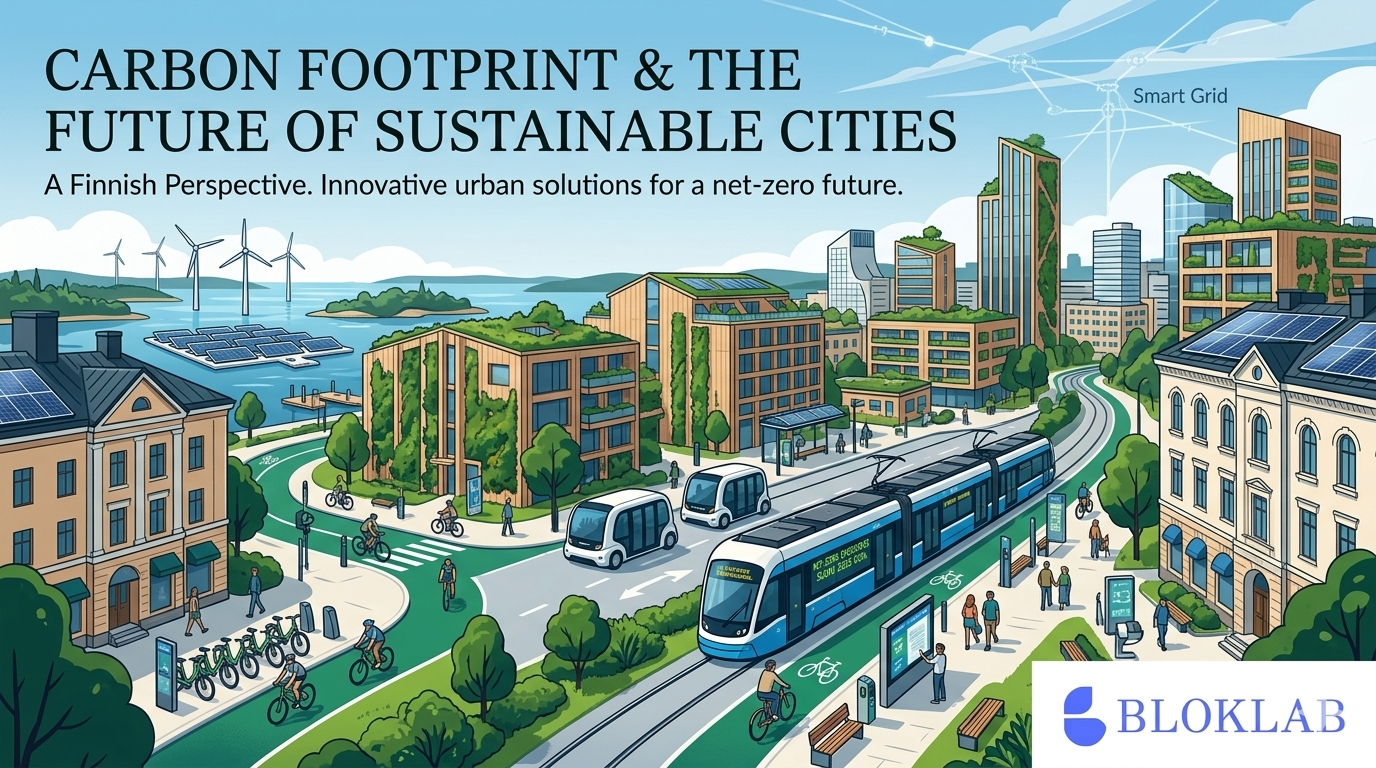
Lessons from Finland’s Real-World Climate Innovations
Climate change has become one of the most pressing challenges of the 21st century. Governments, cities, and individuals are increasingly looking for ways to measure and reduce their environmental impact. One of the most important concepts driving this transformation is the carbon footprint.
A carbon footprint measures the total greenhouse gas emissions caused directly or indirectly by an individual, organization, event, or product. These emissions are typically expressed in CO₂-equivalent (CO₂e) and include activities such as transportation, energy consumption, food production, and industrial processes.
While the concept of carbon footprint measurement has existed for years, modern digital technologies are enabling more accurate, real-time tracking and behavioral incentives. Finland has emerged as one of the most innovative countries experimenting with practical carbon footprint solutions at the city level.
What Is a Carbon Footprint?
A carbon footprint represents the amount of greenhouse gases produced by human activities. The most common sources include:
Transportation (cars, buses, flights)
Electricity and heating
Food production
Manufacturing
Construction
Waste management
For individuals, transportation and housing are typically the largest contributors.
For cities and governments, carbon footprint tracking allows them to:
measure climate impact
design better policies
incentivize sustainable behavior
track progress toward climate neutrality
Many governments now set net-zero targets, meaning they aim to balance the amount of greenhouse gases emitted with the amount removed from the atmosphere.
Finland, for example, has one of the world’s most ambitious goals: carbon neutrality by 2035.
Why Carbon Footprint Tracking Matters
Traditional climate policies often operate at the macro level—carbon taxes, industrial regulation, and renewable energy investments. However, a significant portion of emissions comes from individual lifestyle choices.
Digital carbon footprint tracking systems allow governments and cities to:
Encourage sustainable behavior
Provide real-time climate awareness
Reward citizens for low-carbon lifestyles
Generate data for urban planning
This approach transforms climate policy from top-down regulation to citizen-driven sustainability.
Finland as a Living Laboratory for Carbon Footprint Innovation
Finland has become an important testing ground for smart climate technologies. Several Finnish cities are experimenting with ways to track and reduce the carbon footprint of residents through digital tools and incentives.
One of the most famous examples comes from the city of Lahti, located about 100 kilometers north of Helsinki.
The Lahti CitiCAP Project: Personal Carbon Trading
One of the world’s most innovative carbon footprint experiments took place in Lahti through a project called CitiCAP.
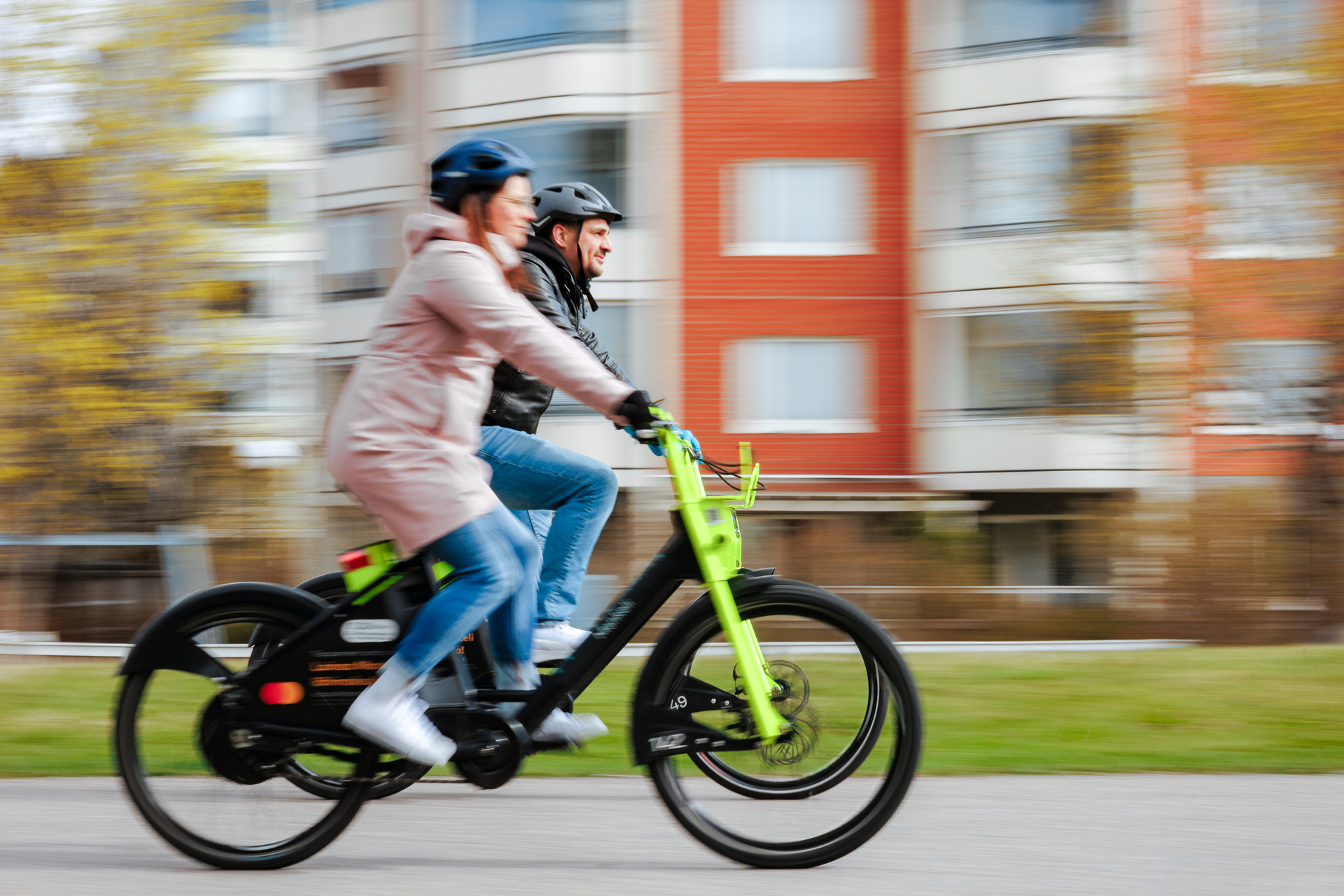

The CitiCAP project introduced a concept called personal carbon trading, where citizens receive incentives for reducing their transportation emissions.
Through a mobile application, residents can track how their daily mobility choices impact their carbon footprint. The system automatically detects whether a person is traveling by:
car
bus
bicycle
walking
The app then calculates the carbon emissions generated by each trip.
Participants receive a weekly carbon budget. If they stay below their carbon limit by choosing sustainable transport options like cycling or public transit, they earn virtual rewards.
These rewards can be exchanged for:
public transport tickets
access to swimming pools
local services
small perks like coffee or snacks.
The project was funded through the European Union’s Urban Innovative Actions program and was designed to encourage sustainable mobility in the city.
The system essentially works like a carbon cap-and-trade system for individuals, similar to how emissions trading works for large industries.
Data-Driven Urban Mobility
The CitiCAP system also generated valuable data for city planning.
By collecting anonymized mobility data, the city of Lahti was able to analyze:
transportation patterns
peak traffic hours
public transit usage
shifts toward cycling or walking
This data allows city planners to design better infrastructure and transportation policies.
For example, during the COVID-19 pandemic, mobility data showed that car traffic decreased significantly while public transit usage also changed dramatically, providing insights into how citizens move within the city.
Climate Apps for Citizen Participation
Another example from Lahti is the Climate Campaigners app, which encourages residents to take everyday actions that reduce emissions.
The app allows users to:
calculate their personal carbon footprint
track emission reductions
complete sustainability challenges
see the environmental impact of their behavior
Citizens can also share their progress and motivate others, turning climate action into a community-driven effort.
This approach demonstrates how digital tools can make climate policy interactive and participatory.
Carbon Footprint Tools for Businesses
Finland has also developed tools for companies and organizations.
One example is Hiilikuri, a carbon footprint calculator used in the tourism sector. The tool helps businesses measure their emissions and identify areas where they can reduce environmental impact.
This allows companies to:
identify high-emission activities
improve energy efficiency
design sustainable operations
communicate climate responsibility to customers
Carbon transparency is becoming increasingly important as consumers demand more sustainable products and services.
Measurable Results in Finnish Cities
These policies are producing measurable outcomes.
For example, a nationwide study found that residents of Lahti have one of the lowest carbon footprints among Finnish municipalities, particularly in areas like energy use and construction emissions.
The city has also set a target to become carbon neutral by 2025, making it one of the most ambitious urban climate programs in Europe.
These results show that combining technology, behavioral incentives, and urban planning can significantly reduce emissions.
The Future: Digital Carbon Economies
Looking ahead, carbon footprint tracking could evolve into something much larger: a digital carbon economy.
Future systems could include:
personal carbon wallets
carbon credit trading for individuals
AI-based emission optimization
integration with smart city infrastructure
blockchain-based carbon tracking systems
For example, a smart city platform could automatically calculate emissions from:
transportation
energy usage
consumption patterns
Citizens could receive incentives or tax benefits for maintaining a low carbon footprint.
The Role of GovTech
Carbon footprint tracking is increasingly becoming a GovTech innovation area.
Governments are exploring ways to integrate carbon measurement into digital public services such as:
smart mobility platforms
digital identity systems
municipal sustainability dashboards
climate budgeting tools
When integrated into digital governance systems, carbon data can help governments design evidence-based environmental policies.
Conclusion
The concept of carbon footprint is evolving from a simple measurement tool into a core infrastructure for climate governance.
Finland’s experiments—particularly in cities like Lahti—demonstrate how digital technology can empower citizens to participate directly in climate action.
By combining data, incentives, and digital platforms, cities can encourage sustainable lifestyles while simultaneously improving urban planning and environmental outcomes.
As climate change continues to shape public policy worldwide, carbon footprint tracking systems may become a fundamental component of next-generation smart cities and digital governments.