Bloklab Blogi
Stripe Launches Machine Payments Protocol (MPP): The Future of Agentic Commerce
Julkaistu: 3/19/2026
Stripe’s Machine Payments Protocol (MPP) enables autonomous AI agents to pay programmatically, supporting fiat, stablecoins, and novel microtransaction models. This blog explains how MPP works, real-world examples, and its transformative potential for agentic commerce.
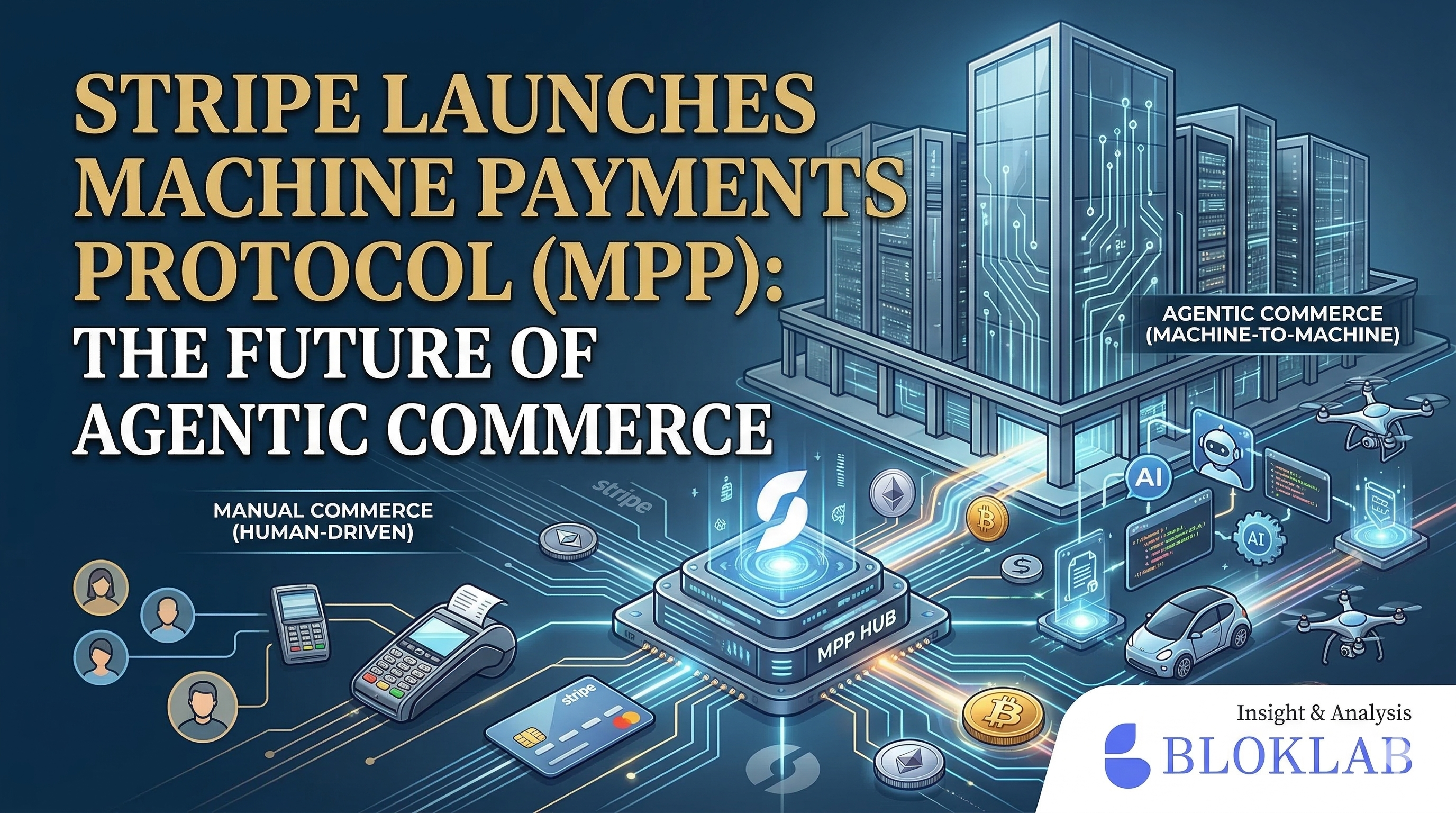
Stripe Launches Machine Payments Protocol (MPP): The Future of Agentic Commerce
Stripe has officially unveiled the Machine Payments Protocol (MPP) — a groundbreaking open standard that allows autonomous AI agents to make payments programmatically. Co-authored with Tempo, MPP is an internet-native specification designed to enable a new generation of agent-driven commerce, including microtransactions, recurring payments, and on-demand services.
For developers and businesses, this represents a significant evolution: not only can human users make payments, but AI agents can now act as independent consumers on the internet, using the same Stripe infrastructure businesses already rely on.
1. What Is the Machine Payments Protocol (MPP)?
At its core, MPP is a standardized protocol for autonomous payments:
Agents request a resource — this could be an API call, a headless browser session, access to a model, or any HTTP-addressable endpoint.
The service responds with a payment request.
The agent authorizes payment programmatically.
The resource is delivered, and the payment settles in the business’s Stripe account just like a standard transaction.
This allows agents to purchase resources without human intervention, using a range of payment types including fiat, stablecoins, and “buy now, pay later” methods via Stripe’s Shared Payment Tokens (SPTs).
2. Why MPP Matters for the Agent Economy
AI agents represent a new user class. Unlike human users, agents:
Operate continuously and autonomously
Execute tasks at massive scale
Interact with digital services programmatically
Stripe’s MPP enables these agents to participate economically, effectively creating an agentic economy where services can monetize usage directly from AI consumers.
This is more than convenience — it allows businesses to:
Monetize microservices at the API level
Implement pay-per-use models for AI infrastructure
Open new revenue streams without additional human intervention
3. Real-World Examples of MPP in Action
Stripe shared several early examples of MPP-powered applications:
BusinessUse CaseHow Agents PayBrowserBaseHeadless browser sessionsAgents pay per session for API-based web automationPostalFormPrinting and mailing servicesAgents programmatically authorize payments to send physical mailProspect Butcher Co.Sandwich delivery in NYCAgents order sandwiches for human pickup or deliveryStripe ClimateCarbon offset contributionsAgents contribute programmatically for sustainability efforts
These examples demonstrate diverse applications — from infrastructure to physical goods to sustainability — showing that agentic commerce is not limited to a single vertical.
4. How MPP Integrates With Stripe
One of the major advantages of MPP is that businesses do not need to build entirely new payment systems. MPP integrates directly with Stripe’s existing APIs and dashboard:
Payments appear like any human transaction
Settlements occur in the business’s default currency
Standard features like tax calculation, fraud protection, reporting, accounting integration, and refunds continue to work seamlessly
For example, creating a payment intent in MPP for a crypto deposit looks like this:
const paymentIntent = await stripe.paymentIntents.create({
  amount: 1,
  currency: 'usd',
  payment_method_types: ['crypto'],
  payment_method_data: {
    type: 'crypto',
  },
  payment_method_options: {
    crypto: {
      mode: 'deposit',
      deposit_options: {
        networks: ['tempo'],
      },
    },
  },
  confirm: true,
});
This simplicity — a few lines of code to accept agent payments — makes it accessible for businesses of all sizes.
5. Technical Foundations: How MPP Works
Step 1: Resource Request
Agents request a resource from:
An API endpoint
Model Context Protocol (MCP) service
Any HTTP-addressable service
Step 2: Payment Request
The service responds with a standardized payment request according to MPP rules.
Step 3: Payment Authorization
Agents confirm the payment programmatically, leveraging fiat, crypto, or other supported methods.
Step 4: Resource Delivery
Once authorized, the service delivers the resource immediately.
This sequence ensures autonomy, security, and traceability — crucial for high-volume agentic commerce.
6. The Broader Agentic Commerce Vision
MPP is part of a larger ecosystem Stripe is building, known as the Agentic Commerce Suite, which includes:
Agentic Commerce Protocol (ACP): Standards for agent-to-service interactions
Model Context Protocol (MCP) integrations: AI agents interacting with model APIs
Payment support for MPP and x402: Flexible, scalable agent payments
Stripe sees a future where agents are first-class users of the web, and MPP is a foundational component for this vision.
7. Implications for Businesses
For Developers
Easily integrate agent payments into existing systems
Support programmatic transactions in fiat, crypto, or hybrid models
Leverage Stripe’s full stack of fraud protection, tax, and reporting tools
For Businesses
Open new revenue models targeting AI agents
Automate microtransactions without adding human friction
Scale service usage dynamically based on programmatic demand
For the Digital Economy
Agents create autonomous economic activity
AI agents can contribute to sustainability, infrastructure, and service ecosystems
The boundary between human and machine commerce begins to blur
8. Getting Started With MPP
Stripe provides documentation and early access for developers and businesses interested in agentic commerce. Key steps include:
Use PaymentIntents API to accept agent payments
Integrate MCP or other service endpoints for automated resource delivery
Monitor transactions in Stripe Dashboard as usual
Businesses that integrate early stand to benefit from first-mover advantages in the agentic economy.
9. Conclusion
Stripe’s Machine Payments Protocol (MPP) is a major step toward an autonomous digital economy, enabling AI agents to act as independent consumers. By providing a seamless, internet-native payment standard, Stripe allows businesses to monetize AI interactions just as they would human transactions — with fraud protection, reporting, and global settlement built in.
From programmatic microtransactions to carbon contributions, agentic commerce powered by MPP represents a new frontier for developers, businesses, and AI ecosystems. Companies adopting these technologies today are positioning themselves at the forefront of the next era of internet commerce.