Bloklab Blogi
The Agent Economy: How AI Agents Are Reshaping Software, Markets, and Value Creation
Julkaistu: 3/25/2026
The Agent Economy marks a fundamental shift in digital markets—where autonomous AI agents, not humans, become the primary consumers of software, services, and infrastructure. This transition is redefining business models, pricing structures, and the very nature of the internet economy.
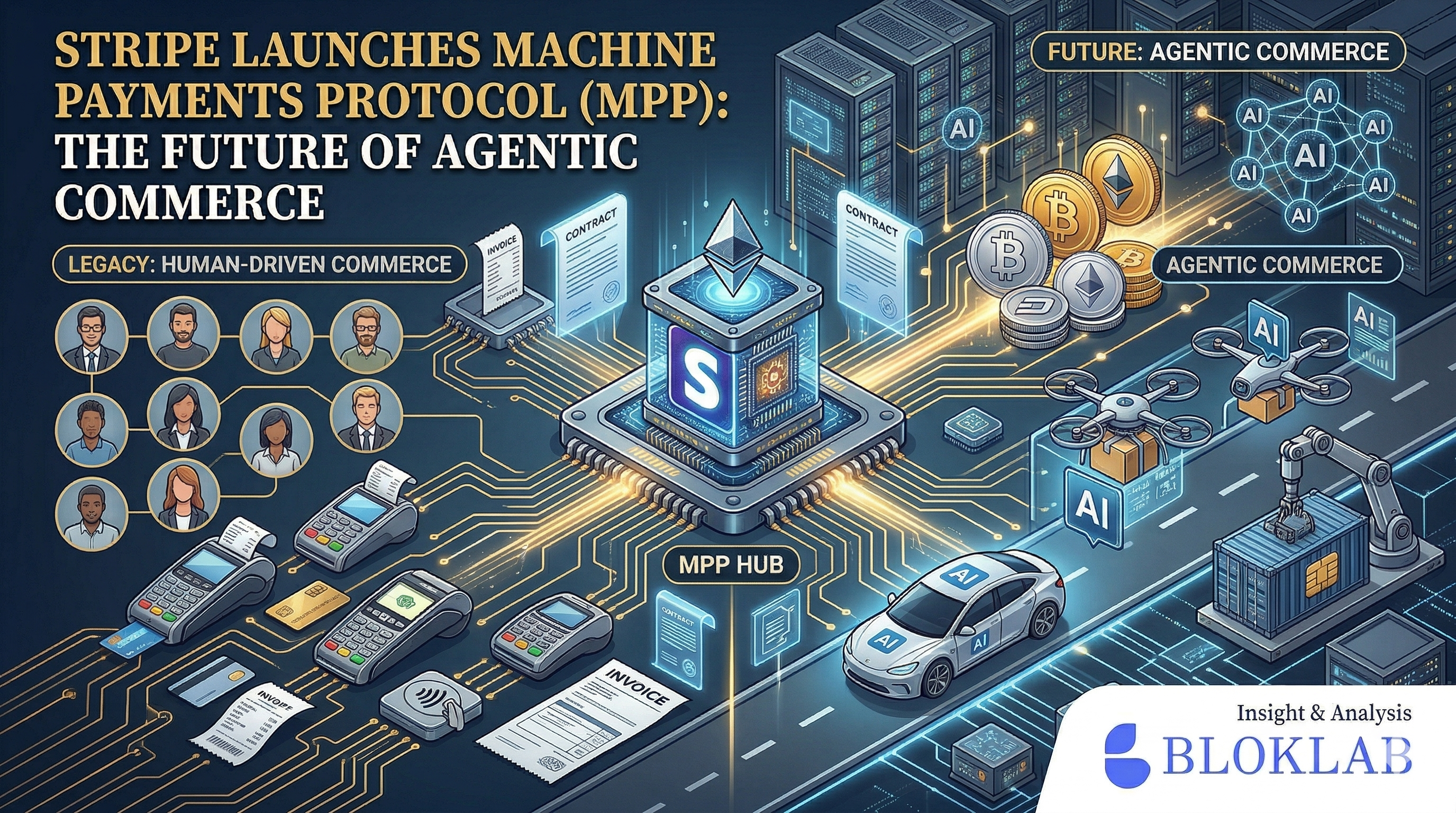
The Agent Economy: A Venture Capital Thesis on the Next Internet Paradigm
From Software Users to Autonomous Economic Actors
Every major platform shift in technology has redefined who—or what—participates in the economy.
The internet connected people to information
Mobile connected people to services
Cloud enabled businesses to scale globally
Now, AI is introducing a new participant:
Autonomous agents acting as economic actors.
The Agent Economy is not simply an extension of SaaS or automation. It represents a structural shift where demand generation, decision-making, and transaction execution move from humans to machines.
This transition will redefine how markets function, how software is built, and where value accrues.
1. The Core Thesis
At its core, the Agent Economy is built on a simple but powerful idea:
AI agents will become the primary interface to the internet—and the primary consumers of digital services.
This implies:
Software will be designed for machines, not humans
Markets will be driven by programmatic demand
Transactions will be executed autonomously
In this world, companies are no longer competing for user attention—they are competing for agent preference.
2. Market Shift: From Attention Economy to Execution Economy
The Web2 era was defined by the attention economy:
Ads
UX optimization
engagement metrics
Success meant capturing and retaining human attention.
The Agent Economy replaces this with an execution economy, where value is determined by:
task completion
efficiency
reliability
cost-performance ratio
Agents do not care about branding, design, or storytelling.
They care about:
latency
pricing
success rate
API reliability
This fundamentally shifts competitive dynamics across industries.
3. The Unbundling of SaaS
SaaS, as we know it, is built around human workflows:
dashboards
manual input
subscription pricing
Agents break this model.
What Happens Next:
Interfaces Collapse
UI layers become optional or disappear entirely.
APIs Become the Product
The underlying capability—not the interface—is what matters.
Pricing Becomes Granular
Subscription → usage → outcome-based pricing.
Vendor Loyalty Declines
Agents optimize continuously, switching providers dynamically.
4. New Primitives of the Agent Economy
To understand where value will accrue, we need to identify the core primitives of this new ecosystem.
1. Intelligence Layer
LLMs and reasoning systems
planning and decision-making
2. Action Layer
agents executing workflows
tool usage and orchestration
3. Payment Layer
programmatic payments
microtransactions
machine-to-machine commerce
4. Identity Layer
agent identity
permission systems
trust frameworks
5. Discovery Layer
how agents find and select services
ranking algorithms for APIs
These layers will define the next generation of billion-dollar companies.
5. Market Size and Opportunity
The Agent Economy is not a niche market—it is a horizontal shift across all industries.
Every API, every SaaS tool, and every digital service becomes:
“Something an agent can buy, use, and optimize.”
Key Opportunity Areas:
AI-native infrastructure
agent marketplaces
programmatic payment systems
identity and trust layers
agent management platforms
This suggests a multi-trillion-dollar opportunity as software consumption itself becomes automated.
6. Emerging Business Models
a. Pay-Per-Outcome
Instead of paying for access:
pay per successful task
pay per completed workflow
b. API Marketplaces for Agents
Platforms where:
services are listed
agents compare offerings
transactions happen automatically
c. Autonomous Supply Chains
Agents managing:
sourcing
logistics
payments
d. Agent-as-a-Service
Businesses offering specialized agents:
legal agents
finance agents
research agents
e. Infrastructure for Agents
Tools for:
orchestration
monitoring
billing
security
7. Competitive Advantage in an Agent-Driven World
Traditional moats weaken.
Branding → Less Important
Agents don’t perceive brand.
UX → Irrelevant
No human interaction.
Lock-in → Reduced
Agents can switch providers instantly.
New Moats Emerge:
Performance
Latency, uptime, accuracy.
Data Advantage
Better inputs → better outputs.
Network Effects
More agents → better optimization → more usage.
Integration Depth
Tighter integration into agent workflows.
8. Risks and Frictions
No paradigm shift comes without challenges.
1. Trust & Control
Who is responsible for agent actions?
2. Security
Autonomous financial transactions increase risk.
3. Regulation
Governments will intervene in:
AI-driven transactions
liability frameworks
financial compliance
4. Market Instability
Highly optimized agents may create:
price wars
volatility
systemic risks
9. Investment Strategy: Where to Bet
From a venture perspective, the most attractive opportunities lie in infrastructure layers, not end-user applications.
High-Conviction Areas:
1. Agent Payment Infrastructure
Protocols enabling machine-to-machine payments.
2. Agent Identity & Trust
Authentication, authorization, and verification layers.
3. Agent Marketplaces
Discovery and ranking of services.
4. Vertical Agent Platforms
Industry-specific agents (finance, legal, healthcare).
5. Observability & Control
Monitoring and governance of agent behavior.
What to Avoid:
Thin wrappers around LLMs
UI-heavy SaaS tools
non-differentiated agent apps
These will likely commoditize quickly.
10. The End State: Autonomous Digital Economies
The long-term trajectory is clear:
agents discover services
agents negotiate pricing
agents execute transactions
agents optimize continuously
Humans move to a higher level:
defining goals
setting constraints
auditing outcomes
This results in a system where economic activity is increasingly autonomous.
Conclusion
The Agent Economy is not just another technology trend—it is a fundamental re-architecture of the internet economy.
Demand shifts from humans to machines
Interfaces collapse into APIs
payments become programmable
markets become dynamic and autonomous
For investors, founders, and builders, the implication is clear:
The next generation of category-defining companies will not be built for users.
They will be built for agents.
The question is no longer:
“How do we attract users?”
But:
“How do we become the default choice for autonomous systems?”